Introduction
Building Muscle After Weight Loss is one of the most common goals people have after reaching a healthier body weight. Losing weight is a major accomplishment, but many people quickly realize the journey is not over. After reducing body fat, the next challenge is developing lean muscle, improving strength, and creating a body that feels healthier, performs better, and is easier to maintain over the long term.
Many individuals discover that simply eating less and doing more cardio is not enough to achieve the toned, athletic appearance they envisioned. Building muscle requires a different strategy that combines progressive strength training, proper nutrition, recovery, and patience. This process is often referred to as Body Recomposition, where the focus shifts from losing weight to improving the ratio of muscle to body fat.
At Fight Gravity Fitness, we help clients who are ready for the next phase of their fitness journey through personalized fitness coaching that is tailored to their goals, experience level, and lifestyle. Instead of chasing lower numbers on the scale, the focus becomes building a stronger, healthier body that supports long-term success both inside and outside the gym.
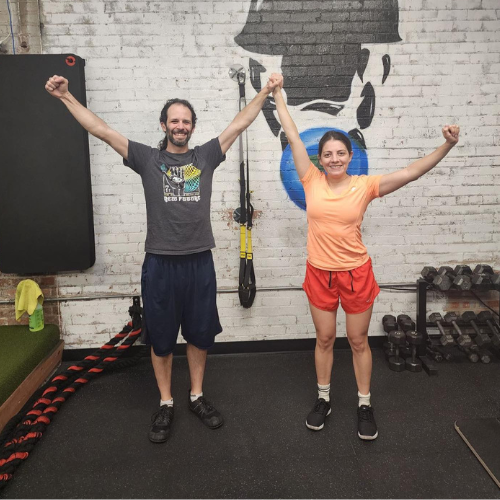
Meet our Denver
Personal Trainers
TL;DR
Losing weight is only part of the fitness journey. Building muscle afterward requires a structured approach that combines resistance training, adequate protein intake, recovery, and gradual progression. Rather than continuing to focus solely on the scale, body recomposition emphasizes improving strength, increasing lean muscle mass, and supporting long-term health. Consistency, patience, and proper coaching often produce the best results.
Key Takeaways
Weight loss and muscle building require different strategies.
Strength training becomes the primary focus after weight loss.
Protein intake supports muscle growth and recovery.
Progressive overload drives long-term muscle development.
Recovery is essential for building lean muscle.
Body recomposition improves both appearance and performance.
Consistency produces better results than extreme approaches.
Muscle supports long-term weight maintenance and overall health.
Why Building Muscle After Weight Loss Matters
Many people reach their weight loss goal only to discover they still are not satisfied with how they look or feel. The reason is simple. Weight loss reduces body fat, but it does not automatically create muscle definition. Without resistance training and proper nutrition, it is possible to become lighter while still lacking the strength, athleticism, and muscle tone many people are hoping to achieve.
Muscle Improves Body Composition
A lower number on the scale does not necessarily mean improved body composition. Two people can weigh exactly the same but have completely different percentages of muscle and body fat.
Body recomposition focuses on increasing lean muscle while maintaining or reducing body fat. This often results in:
Better muscle definition
Improved posture
Increased strength
Better athletic performance
Greater confidence
Improved physical function
Many people notice their clothing fits better even when their body weight changes very little because muscle occupies less space than fat.
Muscle Supports Long-Term Success
Building muscle also makes maintaining weight loss easier over time. Muscle tissue is metabolically active and supports daily energy expenditure. While adding muscle is not a shortcut to dramatically increasing metabolism, preserving lean mass during and after weight loss contributes to better overall health and makes it easier to remain physically active.
Equally important, stronger muscles improve joint stability, reduce injury risk, and allow people to participate in more recreational activities, sports, and everyday movement without discomfort.
Strength Improves Everyday Life
The benefits of muscle development extend well beyond appearance.
Building strength makes everyday tasks easier, including:
Carrying groceries
Lifting children
Climbing stairs
Moving furniture
Yard work
Recreational activities
Traveling with luggage
Many clients at Fight Gravity Fitness discover these practical improvements become far more rewarding than simply seeing a different number on the scale.

Understanding Body Recomposition
Body recomposition focuses on improving the ratio of muscle to body fat rather than simply reducing body weight.
Unlike traditional dieting, body recomposition emphasizes performance, strength, and overall health while gradually improving physical appearance.
The Scale Is No Longer the Best Measurement
One of the biggest mindset shifts after weight loss is learning that the scale should no longer determine success.
As muscle develops, body weight may stay relatively stable while body composition improves significantly.
Instead of relying solely on scale weight, monitor progress using:
Monthly progress photos
Strength improvements
Waist and hip measurements
Clothing fit
Energy levels
Mobility
Workout performance
These indicators provide a much clearer picture of long-term progress.
Patience Produces Better Results
Building muscle takes considerably longer than losing body fat.
Healthy muscle growth is gradual and requires consistency.
Many people become discouraged because they expect dramatic physical changes within a few weeks. In reality, noticeable improvements typically occur over several months of structured training and proper nutrition.
The people who experience the best long-term results are usually those who trust the process and remain consistent.
Strength Training Becomes the Foundation
Cardiovascular exercise likely played a significant role during weight loss. Afterward, resistance training should become the primary focus.
Compound Exercises Produce the Greatest Return
Compound movements train multiple muscle groups at once, allowing you to build strength efficiently while improving coordination and athletic performance.
Examples include:
Squats
Deadlifts
Bench Press
Bent-Over Rows
Overhead Press
Lunges
Pull-Ups
Romanian Deadlifts
These movements recruit large muscle groups, burn significant energy, and develop functional strength that transfers into daily life.
Train the Entire Body
Many people assume muscle-building requires training one body part every day.
For most individuals, especially those with busy schedules, full-body strength training performed three to four times each week provides excellent results.
This approach allows each muscle group to be trained consistently while still providing adequate recovery between sessions.
Progressive Overload Builds Muscle
Muscles only grow when they are challenged beyond their current capacity.
Progressive overload simply means gradually increasing training demands through:
Heavier resistance
Additional repetitions
More sets
Better movement quality
Improved consistency
Small improvements repeated over months produce remarkable long-term changes.
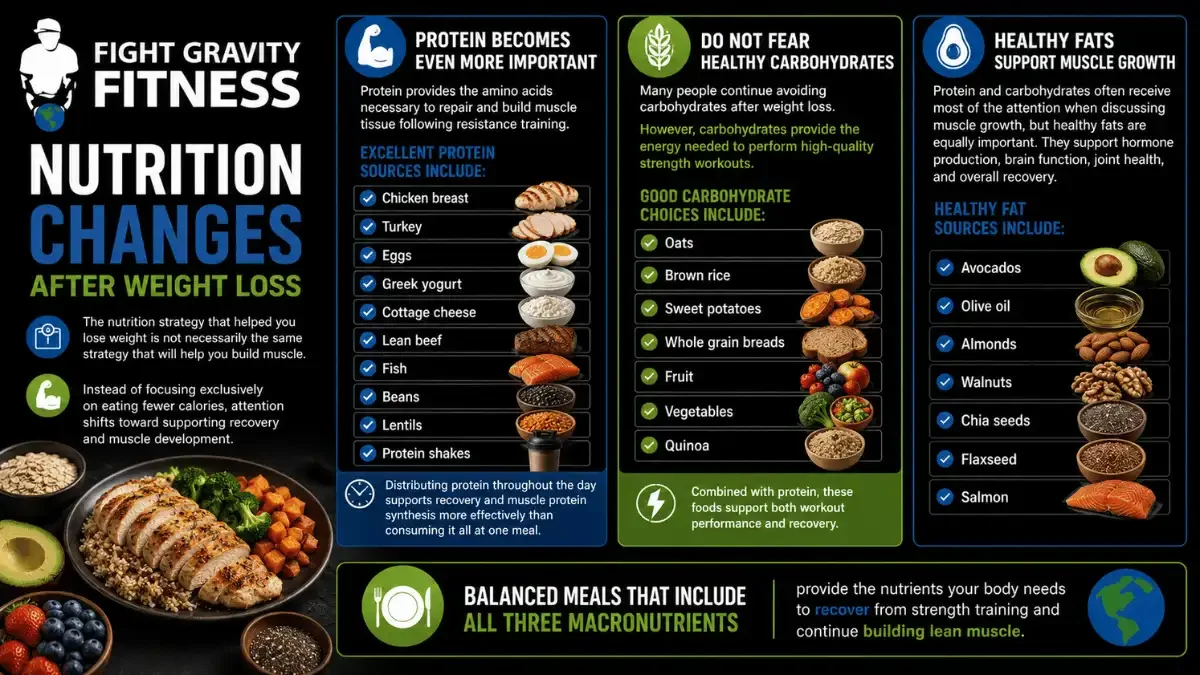
Nutrition Changes After Weight Loss
The nutrition strategy that helped you lose weight is not necessarily the same strategy that will help you build muscle.
Instead of focusing exclusively on eating fewer calories, attention shifts toward supporting recovery and muscle development.
Protein Becomes Even More Important
Protein provides the amino acids necessary to repair and build muscle tissue following resistance training.
Excellent protein sources include:
Turkey
Eggs
Greek yogurt
Cottage cheese
Lean beef
Fish
Beans
Lentils
Protein shakes
Distributing protein throughout the day supports recovery and muscle protein synthesis more effectively than consuming it all at one meal.
Do Not Fear Healthy Carbohydrates
Many people continue avoiding carbohydrates after weight loss.
However, carbohydrates provide the energy needed to perform high-quality strength workouts.
Good carbohydrate choices include:
Oats
Brown rice
Sweet potatoes
Whole grain breads
Fruit
Vegetables
Quinoa
Combined with protein, these foods support both workout performance and recovery.
Healthy Fats Support Muscle Growth
Protein and carbohydrates often receive most of the attention when discussing muscle growth, but healthy fats are equally important. They support hormone production, brain function, joint health, and overall recovery.
Healthy fat sources include:
Avocados
Olive oil
Almonds
Walnuts
Chia seeds
Flaxseed
Salmon
Balanced meals that include all three macronutrients provide the nutrients your body needs to recover from strength training and continue building lean muscle.
“Better movement is the foundation of everything we do. When your body moves the way it is supposed to, strength improves, pain decreases, and daily life becomes easier and more enjoyable.”
Recovery Is Where Muscle Is Built
Many people believe muscles grow while lifting weights.
The reality is that strength training creates the stimulus for growth, but muscle is built during recovery.
Prioritize Sleep
Sleep is one of the most important recovery tools available.
During sleep, your body repairs muscle tissue, regulates hormones, and prepares for future workouts.
Adults should aim for seven to nine hours of quality sleep each night whenever possible.
Rest Days Matter
More workouts do not always produce better results.
Strategic recovery allows muscles to repair and become stronger.
For most people, two to four strength sessions each week combined with planned recovery days creates an excellent balance.
Hydration Supports Recovery
Water plays a critical role in nutrient transport, muscle function, and recovery.
According to the American College of Sports Medicine, proper hydration supports exercise performance, temperature regulation, and recovery following physical activity.
Common Mistakes That Slow Muscle Growth
Many individuals unknowingly continue following the same strategies that helped them lose weight.
Those habits often become obstacles once muscle building becomes the primary goal.
Staying in a Large Calorie Deficit
A calorie deficit supports fat loss but makes muscle growth much more difficult.
Gradually increasing calories while maintaining high-quality food choices provides your body with the resources needed to recover and build muscle.
Too Much Cardio
Cardiovascular exercise remains valuable for heart health, but excessive cardio can reduce recovery if it replaces resistance training.
Instead of eliminating cardio, create a balanced program that prioritizes strength while maintaining cardiovascular fitness.
Constantly Changing Workouts
One of the biggest misconceptions in fitness is that every workout must be different.
Progress comes from improving foundational movements over time.
Following a structured training plan allows you to monitor strength gains and gradually increase training demands.
Measuring Progress Beyond the Scale
Once muscle building becomes the goal, the scale becomes only one measurement.
Many people become discouraged because body weight changes very little while muscle is increasing.
Track Strength
Ask yourself:
Are your lifts improving?
Can you complete more repetitions?
Are exercises becoming easier?
Strength improvements almost always indicate positive progress.
Use Progress Photos
Monthly progress photos often reveal physical improvements long before the scale changes.
Muscle definition, posture, and overall body composition become much easier to evaluate visually.
Monitor Daily Performance
Many clients notice improvements including:
Better posture
Increased energy
Less fatigue
Improved mobility
Greater confidence
Better balance
These are meaningful indicators that your program is working.
Nutrition Timing Can Improve Results
Although overall daily nutrition matters most, meal timing can help support training performance.
Spread Protein Throughout the Day
Rather than eating most of your protein during dinner, distribute it across several meals.
The International Society of Sports Nutrition recommends consuming adequate protein throughout the day to support muscle protein synthesis in active individuals.
Fuel Your Workouts
Eating carbohydrates and protein before training provides energy for exercise.
After training, another balanced meal supports muscle recovery and replenishes energy stores.
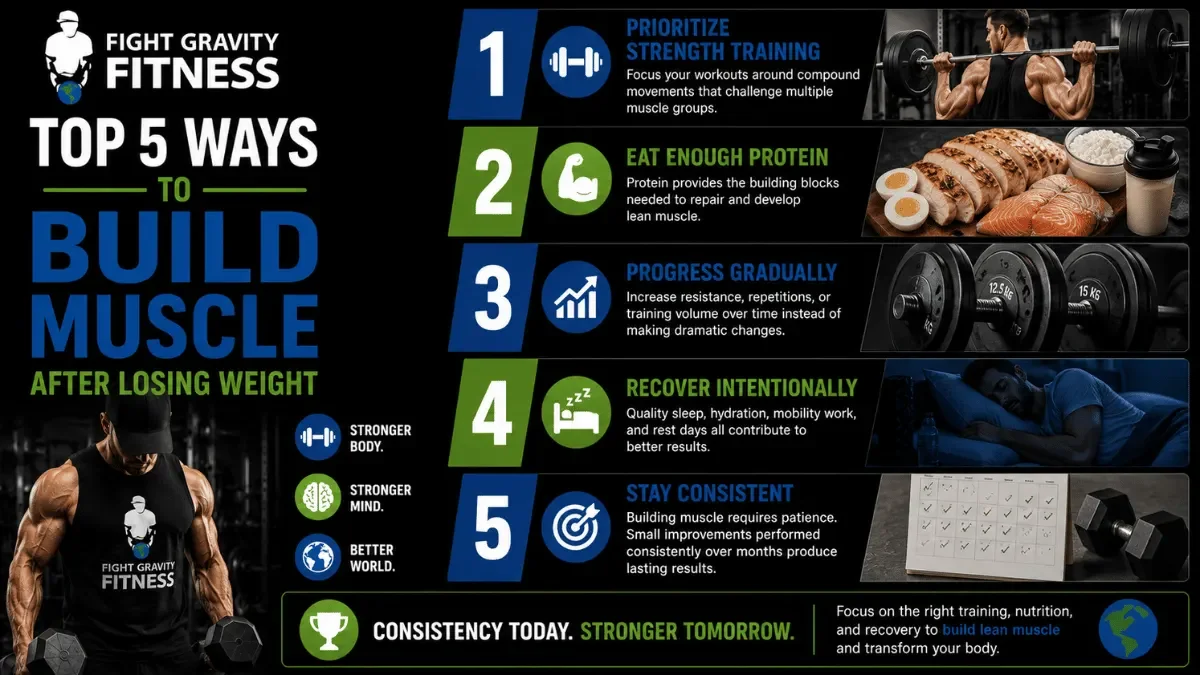
Top 5 Ways to Build Muscle After Losing Weight
1. Prioritize Strength Training
Focus your workouts around compound movements that challenge multiple muscle groups.
2. Eat Enough Protein
Protein provides the building blocks needed to repair and develop lean muscle.
3. Progress Gradually
Increase resistance, repetitions, or training volume over time instead of making dramatic changes.
4. Recover Intentionally
Quality sleep, hydration, mobility work, and rest days all contribute to better results.
5. Stay Consistent
Building muscle requires patience.
Small improvements performed consistently over months produce lasting results.
Why Professional Coaching Makes the Difference
Many people understand the basics of strength training but struggle to apply them consistently.
Professional coaching removes much of the uncertainty.
Individualized Programming
No two people respond exactly the same to exercise.
At Fight Gravity Fitness, every program considers:
Training experience
Injury history
Mobility
Schedule
Recovery ability
Personal goals
Clients benefit from individualized fitness programs that provide structure without unnecessary complexity.
Accountability Builds Consistency
Having scheduled sessions and measurable goals helps maintain momentum during busy weeks.
Many people find that accountability becomes one of the biggest factors in long-term success.
Education Creates Independence
Good coaching teaches clients how to make informed decisions about exercise, recovery, and nutrition.
Over time, this knowledge creates confidence that extends well beyond the gym.
Long-Term Success Comes from Sustainable Habits
Muscle building is not a short-term project.
It is an investment in long-term health.
Build a Routine You Can Maintain
Choose a schedule that realistically fits your life.
Three well-planned strength sessions each week often produce excellent results for busy professionals.
Celebrate Performance Milestones
Instead of focusing only on appearance, celebrate improvements like:
Your first pull-up
A heavier squat
Better mobility
Increased endurance
More confidence
Performance goals create motivation that lasts much longer than chasing a number on the scale.
Continue Learning
Fitness evolves throughout life.
Remaining curious and committed to learning helps you continue improving year after year.
The National Institute on Aging also emphasizes the importance of strength training for maintaining muscle, mobility, and independence as we age.
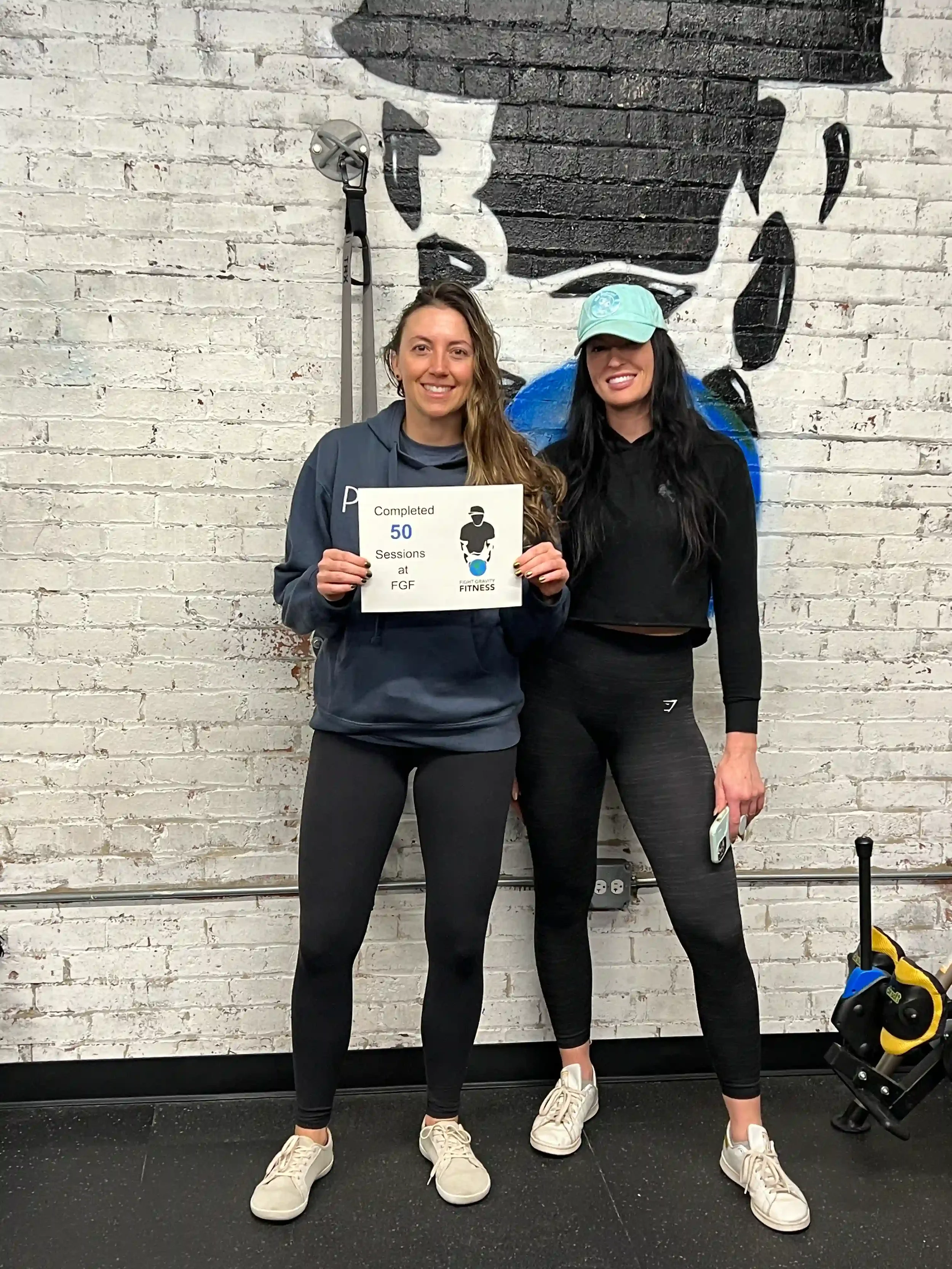
FGF’s Client
Success Stories
FAQs
How long does it take to build muscle after losing weight?
Most people begin noticing measurable strength improvements within four to eight weeks of consistent training. Visible muscle growth typically develops over several months.
Can I lose fat and build muscle at the same time?
Yes. Body recomposition is possible, particularly for beginners, individuals returning to exercise, and those who recently completed a weight loss phase.
How much protein do I need?
Protein needs vary based on body size, activity level, and goals. A qualified coach or registered dietitian can help determine an appropriate intake.
Should I keep doing cardio?
Yes. Cardiovascular exercise remains important for overall health, but resistance training should become the primary focus when your goal shifts toward muscle development.
Is lifting heavy necessary?
Not always. Progressive overload, proper technique, and consistency are more important than simply lifting the heaviest weights possible.
Can beginners build muscle faster?
Many beginners experience rapid improvements because their bodies are adapting to resistance training for the first time.
Conclusion
Building Muscle After Weight Loss is about far more than changing your appearance. It is an opportunity to improve strength, mobility, confidence, and long-term health while creating a body that performs better in everyday life. Weight loss establishes the foundation, but strength training, proper nutrition, recovery, and consistency are what transform that foundation into lasting results.
Instead of continuing to chase a lower number on the scale, shift your focus toward becoming stronger each week, improving movement quality, and developing habits you can maintain for years to come.
At Fight Gravity Fitness, we help clients navigate this next phase through personalized coaching, structured strength programs, and practical guidance that fits real life. Whether your goal is building lean muscle, improving athletic performance, or maintaining your weight loss, investing in strength is one of the smartest decisions you can make for your future.

Nicholas Butler
Founder, Fight Gravity Fitness
Nicholas Butler is the founder of Fight Gravity Fitness and a passionate fitness professional who believes better movement leads to a better life. He specializes in helping busy professionals build strength, restore mobility, improve posture, and create sustainable long-term fitness habits through practical, personalized coaching. Nick holds certifications as a NASM Certified Personal Trainer, TRX Certified Instructor, Silver Sneakers Certified, and is CPR Certified. With years of experience and a strong focus on functional movement, he brings a supportive, results-driven approach that helps clients feel stronger, move better, and maintain an active, pain-free lifestyle. Learn more about the Fight Gravity Fitness coaching philosophy on the About Page.